
Persuasive* probes (1- space captology*)

spacecaptology (18)spacecaptology-(5)

Persuasive* probes (1- space captology*)
Exposição Turn Me On

Pavilhão 28 , Lisbon  (projecto da Número em torno da Video-Arte e Filme de Arte e Ensaio em Portugal). Opening December 14th

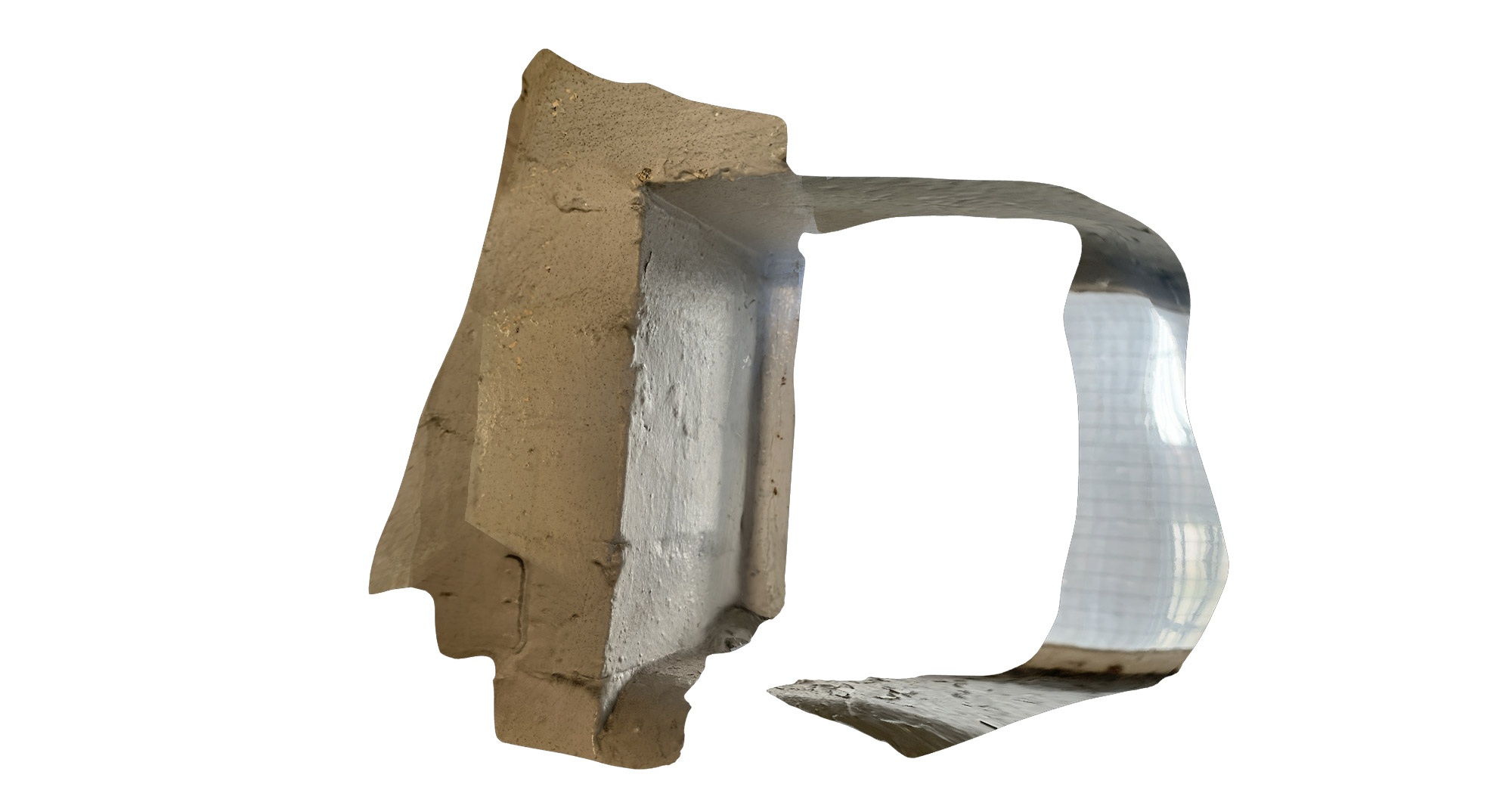
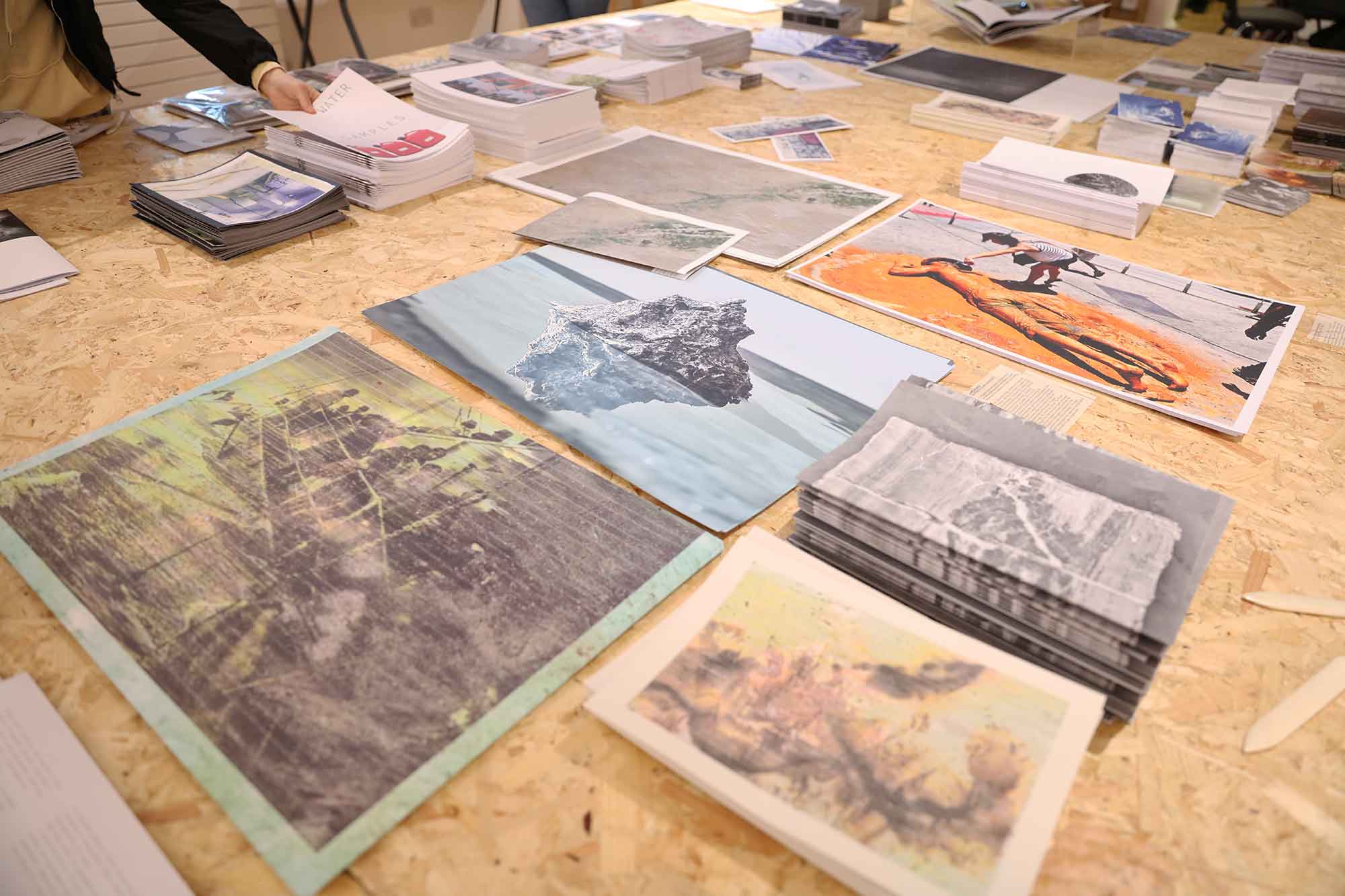
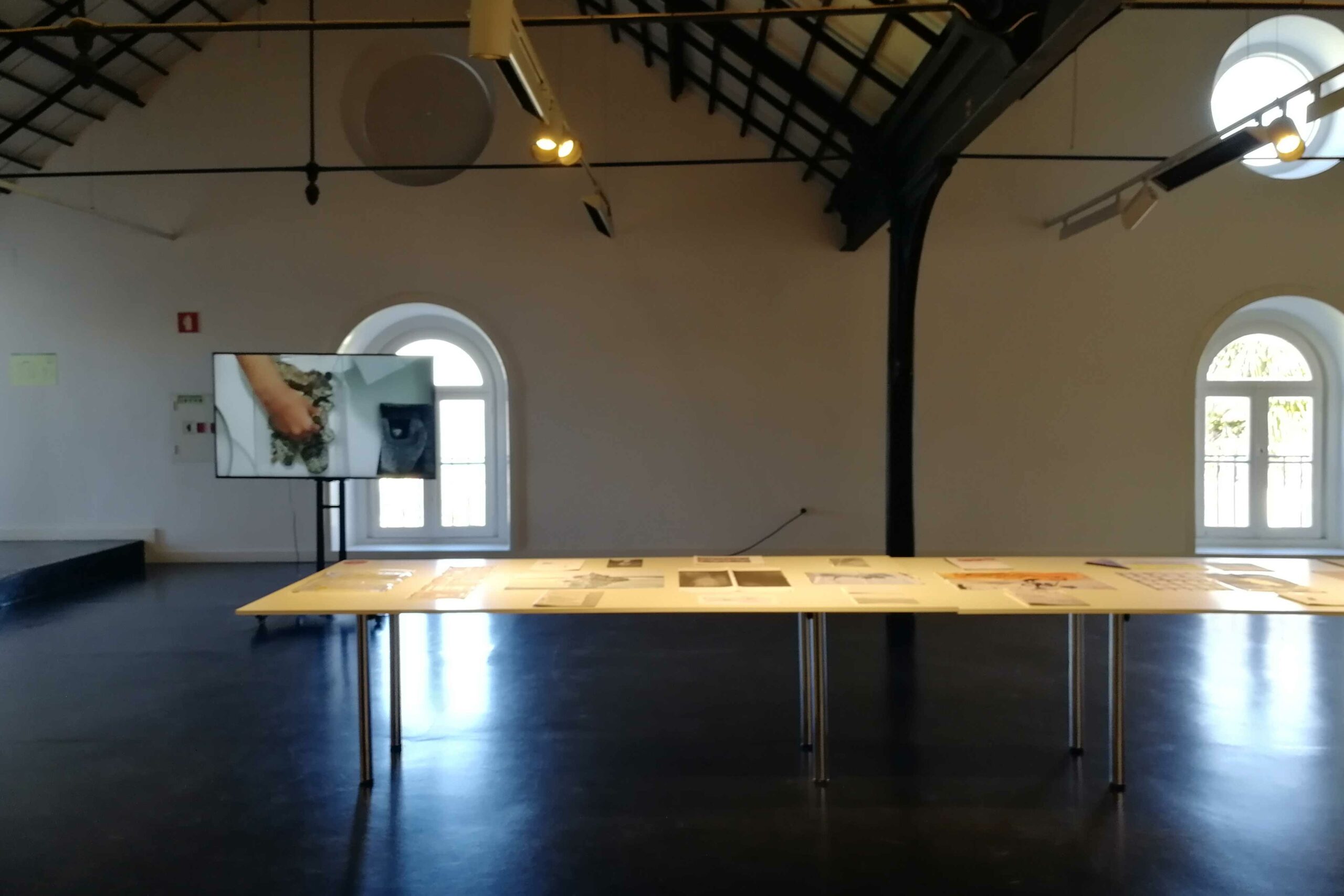
Persuasive probes (1- space captology) is an installation made of 3 elements

a small scale kinetic sculpture made out of a miniature model of a space probe that slowly turns around its axis is installed on site, just outside the room in pavilhao 28; the model is placed on the horizon of the planes flying over on the pathway to Lisbon airport;

a cctv camera incorporated in the model, streams the images to the room; when an airplane passes through, the occasional incident is captured live;

a video projector  streams the live view of the model and airplane flights on the wall playing with ambiguities of optics, scale, transmission and truthful/ fictional narratives of international space missions and inccidents.

The rising and setting sun  table lists the outside installation’s environmental conditions, which may be supplemented by the use of additional light sources

References:

*Persuasive Technology By B. J. Fogg (the emergence of captology)

Persuasive_technology

Captology
Título da exposição e sinopse:

TURN ME ON
“It is no the art object that is exhibited in the museum, which should be enlightened, examined, and judged by the museum, as in earlier times; rather this technologically produced image brings is own light into the darkness of the museum space – and only for a certain period of time.”

Boris Groys, Art Power, Cambridge/London, Mit Press, 2008, p.41

Através de um processo de selecção, de um deslocamento para um espaço delimitado, e de mecanismos expositivos e interpretativos o museu assumiu-se como lugar, real e metafórico, de visibilidade e luminosidade, ecoando a herança das Luzes e prolongando-a até ao “white cube”. De entre as diversas alterações que o século XX introduziu ao nível dos media e dispositivos artísticos, o vídeo diferencia-se ao trazer a escuridão para estes espaços de luminosidade. Ou seja, ao apresentar um luz própria que requer a escuridão em redor, o vídeo parodia, através dos requisitos técnicos que lhe são próprios, a aspiração iluminista da instituição. A necessidade de “estar ligado” assinala este potencial crítico subjacente ao vídeo.

“Turn me on” é também uma expressão ambígua, com uma carga semântica associada ao desejo – “excita-me” - que ajuda a compreender o estatuto contemporâneo da imagem e, em especial, da imagem em movimento. Ao longo de diversos séculos, a imagem constituiu, na cultura ocidental, um mecanismo de corte na totalidade da vida, permitindo a inscrição da cultura no continuo do real. As possibilidades tecnológicas dos dispositivos industriais e pós-industriais permitiram a mobilização daquele que era um modo de fixação. Deste modo, as imagens reaproximam-se do fluxo da vida e assumem uma mobilidade desejante. No espaço expositivo o vídeo através dessa dimensão cinemática - mas também mediante a relação luz/sombra e a dimensão sonora - gera um lugar especial de atracção sobre o espectador, contrariando uma possível despotencialização da arte. Ou seja simultaneamente aproxima-se e distancia-se de uma sociedade pós-espectaculo caracterizada por uma estimulação generalizada.

A presente exposição fundamenta-se e justifica-se em termos contextuais, enquadrando-se no âmbito da publicação Vídeo-Arte e Filme de Arte e Ensaio em Portugal, promovida pela Associação Número. Neste sentido não procura ser uma mostra representativa quer em termos temáticos, quer em termos geracionais, embora o núcleo duro seja da década de 90 – João Tabarra, Alexandre Estrela, Miguel Soares, José Maçãs de Carvalho, Pedro Cabral Santo. Considerámos, ainda, importante integrar um dos nomes responsáveis pela introdução da vídeo art em Portugal - Julião Sarmento - assim como um dos representantes da geração de 2000 - Maria Lusitano - e dois artistas emergentes - André Bastos e Artur Moreia.

No limite o objectivo da exposição é o de deixar circular as vozes dos espectadores e do próprio vídeo, condensadas na expressão “TURN ME ON”.

Lista de artistas

Alexandre Estrela
André Bastos
Artur Moreira
Ernesto de Sousa
Julião Sarmento
João Tabarra
Maçãs de Carvalho
Maria Lusitano
Miguel Soares
Paula Roush
Pedro Cabral Santo
Susana Mendes Silva

images of the exhibition 

Videoarte e Filme de Arte e Ensaio em Portugal

Turn-Me-On

A Associação Número – Arte e Cultura faz esta sexta feira o lançamento do livro Videoarte e Filme de Arte e Ensaio em Portugal no CAMJAP – Fundação Calouste Gulbenkian.  Outras manifestações integradas no Festival Número-Interface(s) 2008 incluem: Exposição Turn Me On (Pavilhão 28 – Hospital Júlio de Matos, de 13 a 30 de Dezembro) e Seminário Universidade da Videoarte (FBAUL, de 15 a 19 de Dezembro, às 17h30).

RADIATOR: EXPLOITS IN THE WIRELESS CITY

13 – 24 January 2009
Launch event: 14 January 6-11pm

// PARTICIPANTS:

Frank Abbott & Duncan Higgins UK // Annexinema UK // Annual General Meeting (AGM) IT/DK // Ryosuke Akiyoshi JP // Blu UK // Jim Brouwer & Chris Cousin UK // Andrew Browne & Katie Doubleday UK // Patrick Farmer UK // Sebastian Craig UK // Glenn Davidson (Artstation) UK // Siân Robinson Davies UK // Dis-locate JP/UK // Niklas Goldbach DE // Hatch UK // Candice Jacobs UK // JODI NL/BE // Miska Knapek DK/SE // Dominic Lash UK // Folke Köbberling & Martin Kaltwasser DE // Son Woo Kyung JP // Matt Milton UK // Leona Misu JP // Yuko Mohri JP // Suzanne Moxhay UK // Ian Nesbitt UK // Christian Nold UK // N55 DK // Chris Oakley UK // Origami Biro & The Joy of Box UK // The Owl Project UK // Plankton AU // paiR UK // Paula Roush PT/UK // Rustie (Warp) UK // Scott Jon Siegel USA //  Spamchop UK // Stanza UK // Akihiko Taniguchi JP // John Timberlake UK // Trampoline: Platform for New Media Art DE/UK // Michiko Tsuda JP // Visual Correspondents NL // John Wall UK // Mizuki WatanabeJP // Shunsuke Watanabe JP // Wounded Knee UK // ZimmerFrei IT

Background
The 4th Radiator festival & symposium, “Exploits in the Wireless City”, aims to instigate discussion and debate based on the understanding that the development of digital networks are transforming our notion of (public and private) space.

In its critique, Radiator will question the opportunities, future strategies and implementations that artists and communities face when learning to act within these new hybrid city spaces.

Through its artistic interventions, Radiator will put theory into practice with projects and events that both position and challenge the dominant forces at work in the urban environment and explore the new territories opened up by hybrid space.

The Going Underground project, investigates this infrastructure by placing 5 artists into the urban confines of British cities: Glenn Davidson (Artstation) (UK), Folke Köbberling & Martin Kaltwasser (DE), Ian Nesbitt (UK), Christian Nold (UK), N55 (DK).  These artists will act as sleeper agents, observing and gathering information from a range of different sources including; architects, planning departments, city council offices, surveillance, monitoring centre’s and the Police to create new work in response to their research.

The Radiator festival and symposium is curated by Anette Schäfer & Miles Chalcraft from Trampoline. Trampoline has hosted and curated events in both Nottingham and Berlin since 1997.

// SYMPOSIUM: EXPLOITS IN THE WIRELESS CITY
15-16 January 2009

A two day event at Broadway Media Centre, Nottingham.
Bringing together artists with architects, urban theorists, computer scientists, sociologists and fellow citizens, the symposium will explore, question and play with a new urban landscape where the re-conceptualizing of the public sphere in the regeneration developments of the East Midlands mirror those around Europe.

// PARTICIPANTS IN THE SYMPOSIUM:

Presentations by: Saskia Sassen (keynote) // Richard Barbrook  // Duncan Campbell  // Rob Van Kranenburg  // Charlie Gere  // Saul Albert  // Simon Sheikh // Peter Goodwin // Neil Cummings // Krzysztof Nawratek // Holger Schnädelbach // JODI // Usman Haque // Gordan Savicic // Folke Köbberling, Martin Kaltwasser // Glenn Davidson (Artstation) // Ion Sørvin, Øivind Alexander Slaatto (N55) // Ian Nesbitt  // Stanza

Chairs and Moderators: Kuba Szreder // Sean Dodson // Joost Van Loon // Susanne Jaschko // David Crouch // Andreas Wittel

Observers and advisors: Sarah Cook // Regine Debatty // Laura Sillars // Alessandro Ludovico

// RADIATOR FESTIVAL & SATELLITE EVENTS
13-24 January 2009

JODI // Blu // Visual Foreign Correspondents - January 2009 // Digital Broadway // Broadway Media Centre // inc Artist’s Talk from JODI & Screening of Spectre of the Spectres

Nikolas Goldbach // Suzanne Moxhay // Visual Foreign Correspondents - 13 – 24 Jan // Urban Screens // Nottingham // Leicester // Derby
Dis-locate – 13 – 24 Jan // Dis-locate is a project based in Japan presenting an annual festival in Tokyo/Yokohama that investigates the relationship between new media and the environment // 13 January Preview 6-8pm // Hand and Heart Gallery // inc. Artist’s Talk & Screening
Hatch - 13 Jan 8pm // A performance platform curated by Michael Pinchbeck & Nathan Miller // Loggerheads

EXPLOITS IN THE WIRELESS CITY EXHIBITION 14 – 24 Jan // Glenn Davidson (Artstation) // Sebastain Craig // Candice Jacobs // Köbberling & Kaltwasser // N55 // Ian Nesbitt // Stanza // Surface Gallery

Dealmaker & Wigflex Presents 14 Jan 9pm – 1am // Rustie (Warp) // Spamchop // Keaver & Brause // Electronica music // Brownes

QUAD Jan 15  5–9.30pm // Annual General Meeting [AGM] // Sîan Robinson Davies // Bill Drummond // Charlie Gere // Paula Roush // Akihko Taniguchi // Jane & Louise Wilson // As part of Symposium trip

Origami Biro and The Joy of Box // Chris Cousin & Jim Brouwer – 15 Jan 9pm // Live experimental electronic music/performance // The New Art Exchange

Trampoline Platform Event – 16 Jan // The Owl Project // Burd & Scarr // Wounded Knee // Patrick Farmer // Dominic Lash // Matt Milton // MIDSR // Lovebites

Fusing Frames Workshop // The New Art Exchange //

Andrew Brown & Kaite Doubleday // Open City Walk
Annexinema – 17 Jan 8pm // An evening of artist’s short films curated by Emily Wilczek & Ian Nesbitt // The Art Organisation

John Wall – 24 Jan 8pm // Closing Event // Backlit

// SYMPOSIUM TICKETS
Full Pass: £ 60 (concs. £ 45)
Single Day: £ 35 (concs. £ 25)
Prices include lunch, refreshments, trip to Derby QUAD & Radiator Festival events (on a first come first serve basis).
Accommodation: special hotel deals with Radiator bookings. Email for details or check website nearer the time.
For Bookings, ring (0)115 840 9272

// TRAVEL
Train // London – Nottingham range from £1 - £11 each way on Megatrain.co.uk – Book Early!
Car // From Lincoln 1hr // Sheffield 1hr // Birmingham 1.5hrs // Manchester 2hrs // Liverpool 2.5hrs // Bristol 2.5hrs
Plane // Super cheap flights with Ryan Air to Nottingham East Midlands from 5€ all incl.!!!

// CONTACT DETAILS
Radiator Festival // 14-18 Broad St // Nottingham // NG1 3AL // England // UK
Tel +44 (0)115 – 840 92 72
info@radiator-festival.org
www.radiator-festival.org
If you would like to be kept updated, subscribe to our e-newsletter or TXT (R8R) to +44 (0) 7786200690

// SUPPORTED BY //
The National Lottery through Arts Council England

// PARTNERS //
Broadway Media Centre // Nottingham Trent University // East Midlands New Technology Initiative // Surface Gallery // Ibis Hotel // Trampoline // The New Art Exchange //  Neighbourhood Development Company // FACT // QUAD // Big Screen Derby // Japan Society // British Council //  The Arts Organisation // Ibis // Phoenix // Nottingham Royal Centre // Hand & Heart Gallery // Lee Rosy’s Tearoom // Backlit

_______________________________________________
additional info:

RADIATOR FESTIVAL & SYMPOSIUM

1. Symposium Participants
2. Symposium Details
3. Festival Participants
4. Book your travel to Radiator: Flights for 5€ all incl.
5. Contact Details
6. Funders & Partners

*  *  *  *  *  *  *  *  *  *  *  *  *  *  *  *  *  *  *  *  *  *  *  *  *  *  *  *  *  *  *  *  *  *  *  *  *  *
1. PARTICIPANTS IN THE RADIATOR SYMPOSIUM ‘Exploits in the Wireless City’:
Saul Albert: Co-organiser of Dorkbot, and co-founder of The People Speak, UK
Richard Barbrook: Critic of the neo-liberal cyber-elite, University of Westminster,
Department of Politics & IR, UK
Duncan Campbell: Freelance Investigative Journalist, UK
David Crouch: Professor Emeritus in Cultural Geography and Senior Research Fellow at the University of Derby, UK
Neil Cummings : Professor of Fine Art at Chelsea College of Art & Design, UK
Sean Dodson: The Guardian, UK
Charlie Gere: Director of Research at the Institute for Cultural Research at Lancaster University UK
Peter Goodwin: Executive Director of Accelerate Nottingham, the leading think-tank on ICT issues for the Greater Nottingham area, UK
Usman Haque: Architect & Artist, UK
JODI : pioneer net artist duo - Joan Heemskerke/NL – Dirk Paesmans/BE
Rob Van Kranenburg: The Waag Society, NL
Joost Van Loon: Institute for Cultural Analysis Nottingham Trent University, UK
Krzysztof Nawratek: Lecturer in Architecture, University of Plymouth
Saskia Sassen: Sociologist and economist noted for her analyses of globalisation and international human migration, USA
Gordon Savicic: Artist, AT/NL
Kuba Szreder: Independent Curator, PL
Holger Schnädelbach (tbc): Mixed Reality Laboratory, University of Nottingham, UK

More tbc….

Observers and advisors:

Sarah Cook: Researcher, co-founder and co-editor of CRUMB (the Curatorial Resource for Upstart Media Bliss), an online resource for curators, producers, commissioners and exhibitors of new media art, UK
Regine Debatty: Initiated we-make-money-not-art.com a weblog for critical media art and cultural discourse, BE/DE
Alessandro Ludovico: Editor of Neural Magazine, IT
Laura Sillars: Head of Programming at FACT, Liverpool, UK

*  *  *  *  *  *  *  *  *  *  *  *  *  *  *  *  *  *  *  *  *  *  *  *  *  *  *  *  *  *  *  *  *  *  *  *  *  *

2. RADIATOR SYMPOSIUM DETAILS

Thurs 15 Jan 09 from 10:00am - 5:00pm
Symposium Panels at Broadway Media Centre, Screen 2, Nottingham

Thurs 15: 5:00pm – 9:30pm:
5:00pm Bus trip to QUAD Derby
5:00pm on bus from Nottingham – Derby: Performance by Sian Robinson Davies

Siân Robinson Davies is an artist who works in Berlin with the performance organisation, Performer Stammtisch. Robinson Davies has recently performed at the Whitstable Biennale 2008 and Preview Berlin, 2008. For Radiator, Robinson Davies will perform “Palm Off”, 2008 on the bus from Nottingham to Derby QUAD. “Palm Off” looks at how we distinguish between different modes of representation and space.

5:30pm @ QUAD:
Performance by Paula Roush: 6:30pm QUAD Box

Paula Roush is an artist and lecturer obsessed with CCTV. Roush will be perform “CCTV Ecstasy” at QUAD Box combining projection, voyeurism, pecha kucha (pronounced peh-chak-cha), masquerade and facebook.

6:30pm @ QUAD:
A conversation with Charlie Gere, following Q&A with audience: 7pm QUAD Box. Moderation Iben Bentzen & Alfredo Cramerotti/AGM

An illustrated talk, both motivational and critical showing what is possible with surveillance not only in terms of resistance (either passive or active) but as “behavioural enjoyment.” Charlie Gere is Director of Research at the Institute for Cultural Research at Lancaster University, and author of the book Digital Culture (Reaktion, 2002). His main research interest is in the cultural effects and meanings of technology and media, particularly in relation to art and philosophy.

7:30pm @ QUAD:
Guided Tour: Jane & Louise Wilson; AGM under_ctrl & Bill Drummond: Plus DJ-electronic lounge 8pm Throughout QUAD

9:30pm bus leaves from Derby back to Nottingham

10:00pm Live Music at The New Art Exchange, Nottingham:
Origami Biro & The Joy of Box

Origami Biro (Expanding Records) is Tom Hill. Formerly one half of the acclaimed electronica duo, Wauvenfold (Wichita Records) Tom earned himself a reputation among the likes of Björk, Super Furry Animals and John Peel himself. The Joy of Box is Jim Boxall. Jim has been working with moving images and live visuals for 14 years and has collaborated with artists such as Theo Travis, Dj Krush, Autechre, Jan Kopinski and Hexstatic. See Origami Biro & The Joy of Box and listen as origami flowers and bubble wrap are shredded into textured beats alongside live double bass, strings and ukulele. Watch as infra red cameras capture the pages of a book, flicked in time to the music. Sit back as two musicians and one video artist weave a tapestry of music and video live on stage.

Fri 16 Jan 09 from 9:00am - 11:00am
Broadway Media Centre, Nottingham
“Pillow Talk”: networking breakfast

Networking event open to all. Discuss and evaluate AGM09, advance proposals for future collaborations; following onto the second day of the Radiator Symposium.

Fri 16 Jan 09 from 11:00am – 5:00pm
Radiator Symposium, Broadway Media Centre, Screen 1, Nottingham

Fri 16: 11:00am Radiator & NTU Presents: Broadway Live Lecture - JODI

JODI explores the relations between the world we build through the Internet and the one based on our past mental and physical maps. Services such as GoogleMaps™ have changed our worldview radically by making the Globe accessible as a commercial multi-user surface. In addition to JODI Live lecture, and as part of Radiator’s Digital Broadway Programme, Radiator will present “Geo Goo” on Broadway’s Glass Screen, where JODI uses a process of coding/decoding, and deciphers cryptic data in a chaotic surface to uncover hidden messages in geometric shapes. http://www.jodi.org

Fri 16: 12:15pm Radiator & NTU Present: Saskia Sassen (Keynote Speech)

Saskia Sassen is the Lynd Professor of Sociology and Member, The Committee on Global Thought, at Columbia University. Her recent books are Territory, Authority, Rights: From Medieval to Global Assemblages ( Princeton University Press 2006), and A Sociology of Globalization (Norton 2007). She wrote a lead essay in the 2006 Venice Biennale of Architecture Catalogue.

Friday 16: 2:00 - 5:00pm Symposium panels: Broadway Media Centre, Screen 1

Friday 16: 7:00pm - Late Trampoline: Platform for New Media Art
Screen 4, Broadway Media Centre Café/Bar, Studio:
Film Screenings, Installations, live Performance, live Music and more…. www.trampoline.org.uk

Symposium Tickets:
Full Pass: £ 60 (concs. £ 45)
Early Birds: £ 50 (concs. £ 40)
Single Day: £ 35 (concs. £ 25)
Prices include lunch, refreshments, trip to Derby Quad, Radiator Festival events.

Accommodation: special hotel deals with Radiator bookings (£35). Please email for details.
For Bookings, ring 0115 840 9272 Early Bird registration is before December 12th

BOOK NOW FOR EARLY BIRD DISCOUNT!

*  *  *  *  *  *  *  *  *  *  *  *  *  *  *  *  *  *  *  *  *  *  *  *  *  *  *  *  *  *  *  *  *  *  *  *  *  *

3. PARTICIPANTS IN THE RADIATOR FESTIVAL
Frank Abbott & Duncan Higgins UK
Annexinema UK
Annual General Meeting (AGM) IT/DK
Ryosuke Akiyoshi JP
Andrew Browne & Katie Doubleday UK
Sebastian Craig UK
Glenn Davidson (Artstation) UK
Siân Robinson Davies UK
Dis-locate JP/UK
Niklas Goldbach (tbc) DE
Hatch UK
Miska Knapek DK/SE
Folke Köbberling & Martin Kaltwasser DE
Son Woo Kyung JP
Leona Misu JP
Yuko Mohri JP
Suzanne Moxhay (tbc) UK
Ian Nesbitt UK
Christian Nold UK
N55 DK
Chris Oakley UK
Plankton AU
Paula Roush PT/UK
Scott Jon Siegel USA
Akihiko Taniguchi JP
Trampoline: Platform for New Media Art DE/UK
Michiko Tsuda JP
Visual Correspondents NL
Mizuki Watanabe JP
Shunsuke Watanabe JP
Stanza UK
ZimmerFrei IT
more tbc

MORE UPDATES ON FESTIVAL PROGRAMME TO COME SOON!

The Radiator Festival and Symposium is curated by Anette Schäfer and Miles Chalcraft from Trampoline. Trampoline has hosted and curated events in both Nottingham and Berlin since 1997.

*  *  *  *  *  *  *  *  *  *  *  *  *  *  *  *  *  *  *  *  *  *  *  *  *  *  *  *  *  *  *  *  *  *  *  *  *  *

4. TRAVEL: Super cheap flights with Ryan Air to Nottingham East Midlands from 5€ all incl.!!!

Nottingham has an airport (East Midlands Airport) and currently www.ryanair.com offers flights for 5€ one way all included.
For example:
flying from Berlin Schönefeld to Radiator on
Wed Jan 14 at 15:55 - 16:55
Fly back on
Sat Jan 17 at 12:35 - 15:30 Berlin (Schönefeld) (SXF)

*  *  *  *  *  *  *  *  *  *  *  *  *  *  *  *  *  *  *  *  *  *  *  *  *  *  *  *  *  *  *  *  *  *

5. CONTACT DETAILS

Radiator Festival, 14-18 Broad St, Nottingham, NG1 3AL, England
Tel ++44 - 115 – 840 92 72
info@radiator-festival.org
www.radiator-festival.org

If you would like to be kept updated, subscribe to our newsletter or txt “R8R” to this UK number 07786200690

*  *  *  *  *  *  *  *  *  *  *  *  *  *  *  *  *  *  *  *  *  *  *  *  *  *  *  *  *  *  *  *  *  *

6. FUNDERS AND PARTNERS

Radiator is supported by The National Lottery through Arts Council England
Partners: Broadway Media Centre, Quad, AGM, Dislocate, FACT, Phoenix, New Art Exchange, Big Screen Derby, The Art Organisation, Surface Gallery, Ibis Hotel

_______________________________________________


http://locative.x-i.net (list archive: + /archive/ )

coyBOTt

coyBott-05

Coybott grew out of conversations between Paula Roush, and Sasha Costanza-Chock at a time Bloomberg corporation was literally blooming in London as a major corporate art sponsor. Simultaneously Mayor Bloomberg started withdrawing public funding from NY art groups and there was no commentary from the critical art world on this matter. These and other contradictions dominated our speculations about the interlocking of capital and cultural production and ways to make these visible in the context of the exhibition Outsourcing in the Institute of International Visual Arts.

Most of the research about boycott and brand ranking is owed to Sasha CC. The project to connect this with research on corporate sponsorship of culture is due to Paula’s own research , and it is still a work in progress, mostly due to technical limitations with available data bases which will hopefully be resolved in the near future. All the programming and Director 3D data visualisation comes from Renauld Courvoisier, aka re. no or the Federation For Random Action who had earlier collaborated with Sasha CC an Ricardo Dominguez on virtual sit-ins.
more

The coyBOTt software and graphic interface is built around a simple database that contains several types of information about global brands.

The data variables, gathered through a combination of static processes (data entry by hand) and dynamic functions (automated search tools), are:

-brand name
-brand rank from 1-100 in the Interbrand ‘World’s Most Valuable Brand’ list (published online at www.interbrand.com and by Business Week)
-www.google.com search engine hits for online calls to boycott global brands
-news & articles published about boycotts against the brand in major english-language newspapers from 1999 to 2001.

These data are gathered for all 100 top global brands, and then used to calculate the position of an avatar that represents each brand in virtual 3D space. The user can select between various versions of the brand avatar, switching between cubes and spheres and choosing whether to texturize the avatar surface with the brand logo.
In addition, these brand avatars have been made to ‘breathe,’ inflating and deflating according to the rise and fall of their stock quotes over the course of the year. Stock values are downloaded dynamically from a stock quotes database fed with financial information by Yahoo.
Viewed all together, coyBOTt builds a 3D data cloud which allows the user to view the avatars of brand power and boycott activity like a school of fish in an aquarium, or a flock of pigeons in flight. The user is able to navigate between different views of the data cloud, zooming in and out, rotating the axes, and magnifying or shrinking the size of the avatars. The user can also toggle a viewing mode where brands are sorted by industry. In this case, a smooth animated transition shows the brand/boycott avatar cloud separate itself into its constituent industry cloudlets.In addition, the user can select any avatar to display a range of information about the brand, including global rank, boycott activity, stock rise and fall, and corporate arts sponsorship.
The initial coyBOTt prototype was built around top global brands between the year 1999-2001. Future versions may track brand, boycott, and sponsorship activities year after year, and increase the brands studied to include national or local as well as global brands. In this complete version, coyBOTt might be able to constantly upgrade itself, and users might be able to develop and input new variables and categories of information to track and analyse practices of branding and resistance.

As usual with msdm projects, coyBOTt was provoked by a series of conversations. One of the initial collaborators was Sasha Costanza-Chock a researcher from the Annenberg School for Communication, University of Pennsylvania, and author of studies on brand ranking and boycotting. In the summer of 2002 the researcher visited London to present his paper HOLLER WITH YOUR DOLLAR: A Preliminary Study of Boycott Activity Against Top Brands.  At this time Bloomberg corporation was literally blooming in London as a major corporate art sponsor. Simultaneously there appeared news in the New York press that Mayor Bloomberg had started withdrawing public funding from art groups and there was no commentary from the critical art world on this matter. These and other contradictions dominated our speculations about the interlocking of capital and cultural production and ways to make these visible in contemporary practice.

Within this context, msdm outsourced programming work to Renauld Courvoisier, aka re.no of the Federation of Random Action, who had previously collaborated with Costanza-Chock in implementing  tactics for electronic contention , namely the Virtual Sit-In for a Living Wage @ Harvard and the Netstrike for Vieques.  The programmer was commissioned to develop a prototype art software search tool and graphic interface called coyBOTt. coyBOTt is designed to search the internet for information about brand rank, boycott activity, and corporate sponsorship, then report the results back to the user, in this case to the exhibition space at the Institute of International Visual Arts ( inIVA) and its on-line extension through data visualisation.

In his past research, Costanza-Chock had first gathered information on boycott activity against top global brands, collecting all data by hand from sources available online. He then conducted statistical analyses of the relationships between brand rank and boycott activity, and found that the rank of a global brand is a good predictor of the amount of boycott activity targeted against it. This research process was useful but painstaking. The coyBOTt aimed at both facilitating and  expanding  this research. It also coincided with  msdm’s aim to  reevaluate contemporary strategies of institutional critique by artists including the network. The coyBOTt was imagined as a free-standing, evolving, multiuse software package. In its first prototype incarnation, coyBOTt code is used to feed a database backing a website that people can visit and query for constantly updated graphs or representations of boycott activity against specified individual brands, brands within industry categories, and global top 100 brands, as well as for information about corporate cultural sponsorship broken down along related lines. The software is made available at www.coybott.net

The outsourcing of a piece of software is to be understood in relation to a desire to avoid the production of a material object and therefore foreground the current shift towards information services. However, we are critical of the North-centered discourse of the ‘information society’ or ‘knowledge economy’ that might be useful in focusing on certain currents but seems to be employed in order to sanitize, disappear, and otherwise make invisible the very real continued state of industrial (factory and sweatshop) production under abusive conditions throughout the 2/3 world - the South, plus poor and incarcerated workers throughout the North.

Northern multinationals engage in the information work of branding, outsourcing all production and hiding it behind the clean shiny surface of the brand. This same ‘information society’ discourse is also used to normalize or naturalize neoliberal ideology and erase even the thought of possible alternatives to the current project of corporate globalisation, that extends the freedom of capital flows while creating ever-tighter blocks on the flows of human beings. In the arts world, this has meant erasure of public arts funding and its partial replacement by corporate sponsorship, which translates to an increasing adoption of corporate management strategies by arts institutions as well as new depths of openness to corporate ‘partnerships.’ Again, this has all been naturalized and is consistently portrayed as the only way forward.

The CoyBott is therefore designed not only as an artistic product that foregrounds the outsourcing of work in the cultural sphere and complicates the branding of arts institutions, but also as a research tool that has potential use value beyond the space of the InIVA exhibition - for artists, social scientists, activists, and indeed anyone who is interested in issues of branding, cultural sponsorship, and resistance to the neoliberal paradigm.

Futhermore  msdm releases coyBOTt as open-source freeware, with the stipulation that any software developed through use of the coyBOTt source code, or any data or representations of data (graphs, maps, and so on) gathered by coyBOTt, be accompanied by the inIVA logo displayed in an appropriate location. In this way, the coyBOTt project also questions the branding of arts institutions by associating the inIVA brand with software that is currently both artware and research tool and that also has the potential to mutate in unforeseen ways. This complicates the standard logic of branding, where branded associations are carefully researched, calculated, reviewed and approved in order to construct corporate identity, and substitutes the potential slippage of branded code and its products once released for public use and adaptation.
link:
In part to illustrate one potential application of coyBOTt, msdm has commissioned sasha costanza-chock to use the software to produce a report on the relationships between brand rank, boycott activity, and corporate arts funding.

msdm/SOFT White Paper #1: Background and Context for the Application of coyote Software to Systematic Analysis of Branding, Boycott, and Cultural Sponsorship by Sasha Costanza-Chock
http://www.nettime.org/Lists-Archives/nettime-l-0307/msg00090.html

[Title]: Proposition to occupy

m4-centre

[Title]: Proposition to occupy: para-architectural strategies: [sub-title1] ‘nomadic space production at the european terrain vague or [ sub-title 2] :the territorial economy of the page

Proposition to occupy the page (widht:16,5 cm/ height: 22,5 cm) as a terrain vague through the photographic documentation of the earlier work ‘m4-uec’ built in 2001 for the empty site of european quarter / frankfurt main (90 hectares /222.4 acres). A photo-cinematic experience to extrapolate from the paper to the space of symbolic representation –political, phenomenological and subjective. The page as a reclamation device, with its own tools to drive the artistic practice forward into the building sites of the symbolic europe, frustrating its power mechanisms, rejecting the glass facades in favour of the garden sheds, and the informal underground economies

‘Tight international borders and extremely polarised class formations divide the cities’ populations into guests and aliens. Additionally, as cities become third generation metropolises, the urban voids compete in time and space with the staged urban scenarios designed for the tourist gaze.’(a)

The term para-architecture (anthony vidier) references (following daniel sherer) the adoption of a type of artistic work which approximates architectural conditions without adopting exclusively architectural means and which appropriates methods of representation from architecture for its own ends. Within this practice, m4-uec investigates current models of networked entertainment, using guerilla like occupation of the terrain vague. Symbolic forms of architecture inspired in the vernacular topologies of the do-it-yourself settlements and underground economies, from kyosks to red ligth sex vitrines, constitute subjective discursive sites for survival models of eco-located identities and citizenships

In 2000 the city of Frankfurt Main opened the debate on the development of the largest european urban entertainment centre on the former cargo grounds of the main trains station. The site was named the Europa- Viertel/ European Quarter and the commissioning process for a luxury mixed retail residential area -launched amongst selected architectural practices- was contested by the residents of the bordering Gallus quarter whose desires for an open access public park were largely ignored. Led by a group of artists, architects and scholars, the Bauhaus Kolleg programme at the Bauhaus Dessau Foundation took the site and the public discussion as the case study for its research project ‘Event City”. My contribution was the m4, a multipurpose kiosk, as a symbolic a tool to initiate the occupation  of the vacant  European Quarter. In addition to activate the empty site and develop connections with the urban field, I saw it as a way to facilitate acess and provoke other forms of occupation: activate a meeting point for both the Burgerinitiative ( European Quarter citizen’s action commitee ) and the residents’ own touristic fantasies, facilitate an intermediary space for both the long-distance travellers and the urban nomads, and provide a multifunctionl platform for informal economies.

Mmmm…M4 Uec: A Micro/ Multiple /Modular / Mobile Artist’s Run Urban Entertainment Centre
mobile installation, 2001-2005

Exhibitions
‘Europe CC: Changing Cities 05’, Haus der Architektur, Graz, Austria, 2002
‘Contemplation Room’, Overgaden Gallery, Copenhagen, Denmark, 2002
‘Other Routes’, Generic Fun, New York, 2002
‘Event City’, Mousonturm, Frankfurt/ Main, Germany, 2002
‘Urban Detours’, Bauhaus Foundation, Dessau 2001

Texts

Roush, P. (2002), ‘Consumption of Desires: Modular Urban Entertainment’. In Regina Bittner (Hg.)Die Stadt als Event (EventCity), Edition Bauhaus Campus Verlag, Frankfurt /New York.

Roush, P., (2001- Forthcoming) ‘M4-UEC: An Artists’ Run Urban Entertainment Centre’ in J. Richardson (Ed.): ‘Subsol: Autonomous Spaces: New Media Labs and Social Centers’, NY Autonomedia.
http://subsol.c3.hu/subsol_2/contributors0/roushtext.html

Roush, P. (2001), launch of experimental unit 02 of m-4

Roush, P (2002) The pre-packed m4 for Copenhagen: cut, fold & place (note a)
The cult & fold pre-fab m4- A4 paper architecture .pdf file for download

about the official plans for Europa Viertel
http://www.emporis.com/en/wm/zo/?id=100049
http://www.vivico.com/english/Themen/Urbanitaet/Beispiel_2/

diasporic strategies in the local worlds


Spaces, visibilities and transcultural flows: diasporic strategies in the local worlds by paula roush, text included in catalogue
download the catalogue [pdf]

The project Local Worlds brings together a range of international contemporary media art and performance works that explore the relationship between the local and the global, looking at how experiences of travel, diaspora and displacement can inform our perceptions of identity, culture and nation. The title Local Worlds refers both to the way the world is part of Lagos local imaginary and the way the local is a form of engagement of the artists with the world they live in. How to approach the ‘local’ is currently – and literally - a locus of intense debate for a range of disciplines and areas of cultural production. In spite of no consensus, there is however, the recognition that migration and travel brought any fixed notion of the local into disarray and there is a need to approach it from a multi-view perspective to account for its complex representations.

THE WORLDS IN THE LOCAL CULTURES
A good place to start is the city of Lagos, where images of the world, mainly references to world journeys and relationships with former Portuguese colonies appear as a strong element of urban culture. This includes the recent Lagos’ branding as ‘City of The Discoveries’[1] and the city’s related heritage, made of monuments and public art which includes as the most visible signs the statues of the twoLagos- based navigators [2] that in the 15th century initiated from Lagos the caravel expeditions into Africa. Henry the Navigator [3] sponsored the first expeditions into Morocco and the western coast of Africa, and Gil Eanes, sailing from Lagos, was the first to go beyond Cape Bojador in 1434 marking the beginning of the Portuguese exploration of Africa [4]. Also in the city centre is the site for the first European slave market[5] - it is known that in the 15th century, Lagos was the first port through which African slaves entered Europe and where the first slave market was held - the building standing on its site having been, meanwhile, converted into an exhibition space.

The ‘world’ of Lagos’ popular culture has the approximate time-space coordinates identified by Peter Sloterdijk in his 2005 philosophical study as the second wave of terrestrial globalisation: “Terrestrial globalisation (actually brought about by the Christian- Capitalist oceanic expansion and politically established by the colonialist policies of Europe’s old Nation States) constructs… the perfectly transparent nuclear part of a three-stage process…which lasted five hundred years, integrating History books as ‘the period of European expansion’. For the majority of historians, it is easy to look at the period between 1492 and 1945 as a closed construct of events – it is the period when the current world system was shaped.” [6] With 1492 the author refers both to the end of the Reconquest [7] and the funding of Columbus’ first voyage [8], but to acknowledge local involvement, one might make a note of 14159, the date when departing from Lagos to occupy Ceuta, the first step in the European colonial expansion was sketched.

This fascination with the ‘lost splendour of the empire,’ more than a mere local interest is in fact a strong component of Portuguese national identity and culture, that crosses into a wide range of daily life discourses and practices as pointed out by João Leal in his 2006 study of the ‘hidden empire’, which the author describes as ‘Imperial nostalgia…and “that seems to rest on a sort of hypermnesia (Roth) for the period of the Discoveries […] In spite of the fact that the 1974 revolution and the birth of new independent States in the Portuguese former colonies have extinguished the Portuguese Imperialist dreams.”[10] In Lagos this is manifested in the city’s ‘territorial marketing campaign’[11], part of a very contemporary fetish of the local, practiced in many other locales, a situation best analysed by critical sociology of cultural globalisation. In Modernity at Large, Arjun Appadurai (2006) [12] describes the culture of the ´local´ as a complex relationship of production and consumption, which we find ourselves alienated from, through the dual fetishism of production and consumption. On one hand, through the creation of the spectacle of the local (the event-city), and on the other, with the use of advertising and media that have a crucial role in the development of campaigns to attract the consumer to the local, offering (in the Baudrillardian sense) a simulacrum of place and experience.

As such, we may point out the prolific production of locality taking place in Lagos through the imaginary of the worldwide colonial expansion [13]. Playing a part in this manufacture of the local spectacle is the use of historic re-enactment. The urban infrastructure- that by itself is already an intense aestheticisation of the colonial imaginary- is every two years animated by the ‘Discoveries Festival’ and the ‘Medieval Market’, each edition marked by the historical re-enactment of episodes of the imperial expansion. In 2008, for example, the focus was the “historic recreation of the arrival of Gil Eanes to the Cape Bojador and Vasco da Gama to India,” which included for the first time in addition to the volunteers and re-enactment groups, the participation of all the school children from Lagos [14]. One of the re-enactment groups describes its participation in the ‘Discoveries Festival’ this way: “To display what our ancestors did and thought, how they dressed, ate and entertained themselves in and around the 15th and 16th centuries, the prosperous period of the Discoveries.”[15] Their concern being to recreate, as accurately as possible, selected episodes of the Portuguese colonial expansion.

In her 2006 study on artistic strategies of re-enactment, curator Inke Arns departs from similar definitions of historic recreation (and practices like living history and live action role play) to outline what they have in common: “They allow access to history or histories, through immersion, embodiment, and empathy in a way that history books cannot” [16] but separates their use of historical memory from its use in contemporary media art. She writes of historical festivals that they “are about imagining oneself away into another time and have nothing (or little) to do with the present, such as playing a totally different role that has nothing (or little) to do with our own reality.”[17] In artistic strategies, on the other hand, “the reference to the past is not history for history’s sake: it is about the relevance of what happened in the past for the here and now.”[18] It is this process that we unpack now.

DIASPORIC STRATEGIES AND MULTI-VIEW WORLDS
Travel, journeys and the relationship to former colonies are also a dominant theme in Local Worlds, where they appear as a drive for a series of intertextual works using photographic media in hybridized formats of performance, installation, drawing and animation. Consider two examples. Berlin-based, Lisbon-born of African descendence Francisco Vidal presents in Again, again and again! 500 outras coisas (2007-2008), a large wall and floor installation of silkscreen printing where he interrogates back the Portuguese empire playing with a serial repetition of faces and patterns, whilst a video recorded documentation of the screen printing performance repeated 500 times – the same years as the history of Portuguese colonisation - echoes with the moot question: how much of the imperial history is a repetition of clichés? Next, London- and Lisbon-based Mónica de Miranda, has created in Back Pack Paradise (2007-2008) a photographic triptych documenting the performative inscription of her own body with maps and landscapes of exotic landscapes, the same maps that represent the imperialist expansion and current transnational movement of people and media. Defying identification by turning her back to the camera, the formal process of admission to a country, which passes by biometric facial recognition, is challenged. As a faceless identity, both artist and migrant, a question arises: will she be allowed in?

Both works represent an engagement with the local and the global from a multicentred perspective that we tentatively suggest is a dominant feature of contemporary media art and performance work in Local Worlds. The process of migration is crucial to this sensibility, yet not fully developed in critical theory, as pointed out by Kobena Mercer in Exiles, Diasporas and Strangers (2008): “Migration throws objects, identities and ideas into flux. It has been a defining feature of modernity yet remains only hazily understood as a significant factor in numerous 20th century artistic formations.”[19]

Amidst the studies to ascertain that different types of migrations are key to the emergence of exiled, diasporic and post-colonial ethnic visual work (cinema, video and also cross-media performative projects) is Hamid Naficy in the 2001 study Accented Cinema suggesting that “Diaspora, like exile, often begins with trauma, rupture and coercion, and it involves the scattering of populations to places outside their homeland. Sometimes, however, the scattering is caused by a desire for increased trade, for work, or for colonial and imperial pursuits. Consequently… they can be: victim/refugee diasporas…labour/service diasporas …trade/business diasporas…imperial/colonial diasporas …and cultural hybrid diasporas…” [20] One of the dominating aspects of diasporic video and filmic production is their interstitial character, which arises from the particular type of journeys their authors undertake: “They cross many borders and engage in many deterritorialising and reterritorialising journeys, which take several forms, including home-seeking journeys, journeys of homelessness, and homecoming journeys. However, these journeys are not just physical and territorial but are also deeply psychological and philosophical. Among the most important are journeys of identity, in the course of which old identities are sometimes shed and new ones refashioned….Identity is not a fixed essence but a process of becoming, even a performance of identity.” [21]

In the realm of visual arts, Sieglinde Lemke in the 2008 study of diasporic aesthetic suggests “It often portrays the act of crossing, the process of migration and what it means to live in a state of exile. In some way or another, a diasporic aesthetic is concerned with the dialectic of the ‘home’ and the ‘host land’.” [22] Based on James Clifford’s concepts of roots/routes as forms of community consciousness, Homi Bhabha and Stuart Hall’s notions of cultural hybridism, and Nicholas Mirzoeff concept of a multiple viewpoint perspective as the diasporic way of seeing, we can consider along with Lemke that typical of diasporic art is the multiple-view point. As the diasporic condition creates multiple-view perspectives, this is expressed in the diasporic art as a multi-perspective situation. Nevertheless, diasporic works do not limit themselves to represent an author’s shifting perspectives of home, exile or separation. Another important feature is its effect on the viewer’s reception and participation in the work as it invokes the diasporic gaze: “Its attendant mode of reception entices the spectator to grapple with multiplicity and heterogeneity, urging the diasporic gaze to wander between different visual sites.” In summary, the “diasporic Gesamtkunstwerk (holistic artwork) invites a multiple point of view perspective because it sends our gaze en route.” [23]

It is the politics of the diasporic gaze that brings us back into the area of Portuguese post-colonial studies, where a similar perspectival shift is identified as a way of re-reading the past from the present. In the 2005 project Dislocating Europe, Manuela Ribeiro Sanches [24], reads a movement of ‘contextualized dislocating’ [25] in contemporary art practices, bringing together ethnographic approaches with site-specific interventions, that depart from the local to question authoritarian concepts of ‘culture’ and ‘other.’ “The post-colonial approach questions epistemological certainties and disciplinary methodologies, the linearity of a historical time centred on the ‘West’, at the same time
as it appropriates creatively its theory in order to retrieve other subjectivities and narratives that were silenced by Eurocentrism, emphasizing the central role of colonial violence in the composition of the totalities that post-modernism would question and post-colonialism would interpret in an alternative way.”
[26]

This has been the latest task of cultural producers in their attempt to bring these issues into debate. Nirun Ratnam in studying the theme of art and globalisation [27], locates the emergence of this interest in Documenta 11 in Kassel, and its curatorial focus on the spatial metaphor of ‘nearness’ that characterizes the post-colonial, as presented by Okwui Enwezor in the 2002 catalogue: “It is a world of nearness, not an elsewhere. Neither is it a vulgar state of endless contestations and anomie, chaos and unsustainability, but rather the very space where the tensions that govern all ethical relationships between citizen and subject converge.” [28] Similarly, Fernandes Dias [29] in his summary of Portuguese post-colonial curatorial activities indicates a triad of Lisbon-based exhibitions (Uma Casa do Mundo, Imagens de Troca e Project Room, besides the New York-Lisbon Looking Both Ways) as influential in the conceptualization of the post-colonial in contemporary art practices. Yet there is an urgency in widening the debate from the centres and quasi-centres of the art word (Kassel, Lisbon) to bring it to the much more peripheral city of Lagos.

To further exemplify how these ideas are explored in the Local Worlds program, we present a selection of paradigmatic projects along the lines of spaces, visibilities and transcultural flows, which is the subtitle of the project and refers to a possible although non-exhaustive typology of diasporic strategies. Whilst space stands for geographical land, landscape or terrain, it is the emotional, lived experience of the land, the home, the local, that makes it into a place. Following Lefebvre’s triad of social space production [30] – lived space (representational space), perceived space (spatial practice), conceived space (representations of space) - visibilities refer to the investment - affective, social, financial - that is always shaping the places we inhabit, and which side by side with displacement and the identity conflicts become the core of diasporic politics. Transcultural (a term that can be traced back to Ortiz’s transculturalism or cultural convergence [31] flows, refers to Arjun Appadurai’s [32] multiplicity of scapes - financial, ideological, mediatic, ethnic - that account for globalization, but whose disjunctions inform the paradoxical character of transcultural flows.

SPACES: HISTORY AND ALLMNESIA
Distinctions between space and place, based on relational attachment to the spaces of daily life, allow an entry point into the feeling of space. Allmnesia (2008), the site-specific concer tinstallation by Lagos-based Tiago Cutileiro and Jorge Pereira, is made out of images and sounds sourced from Lagos. Projected into the patio of the Centro Cultural de Lagos for one hour, the performance evoques the disruption of memory associated with
the rapid spatial mutations happening as a result of a fast paced economic growth dominated by tourism real estate.

Calling it Allmnesia, the piece also comments on semiotic processes of signification associated with space production and commoditisation. Lagos is one of the sixteen towns that form the municipality of Algarve, the southernmost region of mainland Portugal. Up to the mid-12th century, under the Moorish occupation of Iberia, the region was called “Al-Garb Al-Andalus”33, then renamed Algarve, after the Portuguese occupation, and more recently reinvented as Allgarve [34] in the campaign to promote Algarve to the English speaking audiences and under which Local Worlds has been developed. Are we heading towards a new moment of erasure, where local history is rewritten to signify a new commodity for global consumption? Following the mechanical ballet of the cranes dancing to the recorded sounds of sea, one can see the other side of the Algarve, a wrong, dysfunctional, psychopathic side. Challenging the postcard, crystallized, mirror-façade image of a perfect Allgarve, the question is raised: will all this result in another a(ll)mnesia? Or will this contribute towards the total amnesia (allmnesia), that the history of the ‘discoveries’ has become? In this context, this can be a positive contribution to a reflection on space. As pointed out by Miwon Kwon in her 2006 study of site-specific art: “An encounter with a ”wrong“ place is likely to expose the instability of the ”right“ place, and by extension the instability of the self.” [35]

VISIBILITIES: UTOPIAS AND CANNIBALISMS
Portuguese Luanda-born Cláudia Cristóvão, in a diasporic position herself, lives and works between London and Amsterdam, and her work looks at the condition lived by those found between one place and another. In the multi-screen video installation Fata Morgana (My Africa) (2006) she rehearses a polyphonic visualisation of the empire as the project of a nation, and part of a collective imaginary partially interrupted with the 1974 Portuguese
Revolution (which initiated Democracy in the aftermath of the “New State” dictatorship). The work is developed out of interviews conducted with children of the ‘retornados’ (returnees) who were born in Africa before 1974 but had to leave following the decolonization movement. Now adults that grew away from their country of origin, each one speaks about an Africa they hardly experienced, uttering multiple viewpoints of an Africa they own in their
hearts but never really lived. Projecting their visions against the background of a mirage, their accounts attempt to fill in the historical gap provoked by the process of (de) colonisation with a mirage of a utopian Africa.

The assertions by Ashcroft, Griffiths and Tiffin in The Empire Writes Back (1989) defend that a major feature defining post-colonialism is “the concern with place and displacement. It is here that the special post-colonial crisis of identity comes into being; the concern with the development or recovery of an effective identifying relationship between self and place” could aptly apply to the process we see at play in the work. Alienation of vision and linguistic gaps in the construction of place appear as the symptoms of displacement, which can only be apprehended if we “go beyond the usual categories of social alienation such as master/slave; free/bonded; ruler/
ruled, however important and widespread these may be in post-colonial cultures.”[36] In the study on the white Angolans as returnees [37], Ricardo Ovallo-Bahamon (2003) points to the defining features of the “returnees”
caught between the former colonies and the continental Portugal, and their ambiguous positioning as both part of the colonial rule and the wave of African migration arriving into the continent from the mid 1970s onwards.

Like Cláudia Cristóvão, Luanda-born António Ole approaches in Retrato Falado (2007) the colonial encounter but from a radically different perspective. In the photographic triptych António plays with the politics of alterity, as identity performance and empowerment strategy, exploring the limits between fiction and reality. The triple self-portrait, built with a mannequin and props as a surrealist surrogate of the self, explores the mimetism of suspicious, marginal, threatening identities. Positing himself as cannibal, queer, warrior, soldier or chinese militant, it evokes identities in collusion that express the anxiety of the post-colonial subject, in a “post-9/11” climate of fear. In spite of its title, the voice is never heard, as the portraits remain condemned to the absence of written or spoken word. But if they spoke, in which language would they do it: in the language of ”Lusophony” imposed by the process of colonization - or by recourse to other African languages?

The work can be understood as an allegory on the reports of African cannibalism that circulated amongst the colonizers as a rationale for western intervention and other times were used by Africans as a tactic of self-defense,
as explained by Beatrix Heintze in her 2006 study about cannibalism in Angola: ‘Defamation and discrimination of the natives, calling them cannibals,… helped objectify the African people, reducing them to a commodity, commercializing them on a large scale in the transatlantic slave traffic. Later, from the 19th century on, the accusation of cannibalism became an important argument for the Portuguese to impose re-education and forced
labour under the guise of ‘civilization’ through colonial repression. One can understand the extent to which this topos continues to haunt Western minds if we remember how in March 2000 a socialist member of the European
Parliament insulted an Angolan minister calling him ‘cannibal’. ”[38]

TRANSCULTURAL FLOWS: ORANGES AND SATELLITES
The two last projects commented here are Oranges by Inês Amado and Global Positioning System by Melanie Jackson. Both reflect the intricacies of the global flows, following the trajectories of particular objects, relying on an archaeological approach of everyday items that follow the routes of global imperialism/capitalism. Jyotsna G. Singh in her Companion to the Global Renaissance [39], suggests similarly an archaeology of “local “knowledge (following Certeau and Foucault), that relies on “a micro-historical perspective on globalism by tracing the exchange and movement of material objects — artworks, spices, silks, pigments, metals, and cloth — in order to understand the trajectories of the east-west encounters.’

With Laranjas (2008), Portuguese longtime London-based artist Inês Amado fills one of the spaces at the Forte Pau da Bandeira40 with oranges that visitors can take away. Presented on the floor, the oranges are surrounded
by a soundscape of a journey on the river Thames produced in collaboration with London-based artist Dave Lawrence that evokes the long journey of the fruit around the world. In the installation, the orange becomes
a relational object, a fruit that symbolizes the journeys of terrestrial globalization and the cultural hybridization resulting from the food exchanges occurring in colonial journeys.[41]

As Inês reminds us, oranges arrived in Portugal from Arab countries (even if it was the bitter orange), followed by the Chinese orange trees (which resulted in the sweet orange) brought in by Vasco da Gama the navigator, and the third wave of the oranges already exported by the Portuguese into the world. Used to work with food (her long-term project Bread Matters [42] is dedicated to the study of bread), in this project Inês departs from the orange to reflect on the fact that Portuguese culture is not monolithic and results from complex processes of hybridisation. If on one hand, the orange’s spherical shape evokes the globe, it is also a fact that internationally
the orange symbolises Portugal. Several countries that imported orange trees from Portugal, started giving the oranges varied names derived from the word Portugal, such as Portokale (Albania), Portughal (Kurdistan),
Portugaletto (Piemonte) and Portugales (Greece).

The predominance of contemporary panoptic society, with means of controlling borders and people in an uneven way results that paradoxically commodities circulate much more easily than people that are kept in place through tight border regimes. This vision of technology is one the driving forces behind the animation work A Global Positioning System (2006) by American, London-based artist Melanie Jackson.

The animated film charts the journey across the globe of the GPS unit, as a reverse journey from a promotional brochure selling the benefits of the handheld GPS to an urban western audience to the varied components of
its production. Breaking down the GPS manufacturing workflow is made out of two movements: on one hand panning across the world, from the global centres of consumption into the factories in China and further afield into the mines of Democratic Republic of Congo or the rubber trees in Sri Lanka; and on the other hand, a zooming in process, going from the macro-scale of the global economy into the most intimate gestures of manual production and the microscopic components of the GPS unit. Melanie presents this journey as a way of depicting the material process of production and challenges the disjunction that capitalism operates between things and their image. From images of miners working in the sandpits of Congo, she uses drawing as away to develop connections with
the more abstract level of high tech glossy consumer technology.

As the voice over narrates: this GPS contains materials that come from the following places: Guinea, China…India…Germany, England, Zambia…Brazil, Australia, Turkey, Nigeria, Spain, …Mexico, Chile, Philippines, USA, Argentina, Portugal, Japan, Korea…South Africa…Angola, Democratic Republic of Congo, Namibia, Venezuela…

CONCLUSION
The works selected for Local Worlds explore the relationship between the local and the global, looking at how experiences of travel and displacement can inform perceptions of identity, culture and nation. To understand
the ideas behind the selection of works, we discussed the themes of travel and world in Lagos popular culture. This placed us in contact with the imaginary of the (Portuguese) ´discoveries´ marked by a ‘nostalgia of the empire’. In contrast, the new media art and performance works in the exhibition explore the themes of migration and travel from a multicentred perspective. The multi-view gaze that is a feature of diasporic strategies, seems to convey the post-colonial moment, a much needed shift of perspective when engaging with the empire.

Bringing in together for the first time, in Lagos, artists from a variety of diasporic positions, creates new signifying juxtapositions that map out the complexity of the spatialities and subjectivities crossed by all those in transit. Lagos, Lisbon, Oporto, Funchal, Malaga, London, Milan, Amesterdam, Berlin, New York, San Francisco, Rio de Janeiro, São Paulo, Luanda, Benguela, Praia, Mali and Maputo, these are just some of the points of engagement with emotional landscapes that is possible to tease and tear apart. As such, and in response to the official and mediatised history of the place, each work invites the viewer to approach the local - be it personal, social, real or imaginary - as an archaeology of everyday objects and cultural practices.

With Portugal caught in the aftermath of de-colonisation from former colonies and its integration in Europe, there is an emergent need to address the relationship between imperialism, globalisation and the post-colonial condition, and the diasporic strategies presented in Local Worlds allow for this reflexive approach. Departing our readings from the locational specificity of Lagos, we attempt a perceptual shift, asking: do these relational modes
of seeing leads us into a timely conversation with a locale performing its identity in proximity to the ghosts of the nation’s former empire?

REFERENCES
1 The title ‘Lagos of the Discoveries’, being “the label that the region wants to assert to the rest of the country” is part of the Plano Estratégico de Lagos (PEL – Strategic Development Plan for Lagos), which includes other proposals such as the Forum of the Discoveries, the Scholl of the Discoveries and the University of the Oceans. Article 5 ‘Orientations in the Cultural Domain’ on ‘Lagos, Capital City of the Discoveries’ states that its “adoption as symbolic image is contextualized by the rich heritage and history in relation with that period. … The Discoveries motto may also be used as a reason to establish geminations, articulations and international representations in Portuguese speaking countries, recalling the former connection between Lagos and the discovered lands.” More information available at: http://www.cm-lagos.pt/NR/rdonlyres/CB594E70-73C4-4331-B070-
87D89D8E45C2/0/OrientacoesdaCultura.pdf
[Accessed May 17, 2008].
2 A third historic icon in Lagos’ town centre is the statue of King Sebastian, who departed from Lagos to fight in a crusade against the kingdom of Fez in 1578, created by sculptor João Cutileiro.
3 See http://en.wikipedia.org/wiki/Henry_the_Navigator. [Accessed May 17, 2008]. The abundant references to social media throughout the text, and particularly to wikipedia, represent a deliberate effort to avoid history text books and build on collective, potentially imprecise knowledge of the Portuguese colonial past available online, but no more flawed than official historical accounts which I was taught with in primary school.
4 See http://en.wikipedia.org/wiki/Gil_Eanes [Accessed May 17, 2008].
5 There is a 17th century building standing on the exact site where one of the first slave markets were held in the 15th century. As the major sponsor of these expeditions, Prince Henry received one fifth of the selling price of the slaves. http://en.wikipedia.org/wiki/Lagos%2C_Portugal
6 The author divides globalisation into three periods: the first being the stage of “spherical conceptualisation” and the third the stage of “electronic globalisation”. Peter Sloterdijk (2005) Palácio de Cristal Para uma Teoria Filosófica da Globalização, Lisboa: Relógio d`Água, p. 19-20
7 The Reconquista (a Spanish and Portuguese word for ‘Reconquest’) was a period of 750 years in which several Christian kingdoms expanded themselves over the Iberian Peninsula at the expense of the Muslim states of Al-Andalus http://en.wikipedia.org/wiki/Reconquista [Accessed May 4, 2008].
8 See http://en.wikipedia.org/wiki/Christopher_Columbus [Accessed May 4, 2008].
9 In 1415 King João sailed from the harbour of Lagos, to attack the city of Ceuta. See http://en.wikipedia.org/wiki/Lagos,_Portugal[Accessed May 4, 2008].
10 Leal, J., 2006. O império escondido: camponeses, construção da nação e império na antropologia portuguesa. In M. Ribeiro Sanches (ed.) Portugal não é um país pequeno. Contar o “império” na pós-colonialidade. Lisboa: Edições Cotovia, pp. 63-79.
11 This is part of the PEL, chapter 6 ‘Orientations in Territorial Marketing’: “ The brand ‘Lagos – Land of the Discoveries,’ which should integrate all marketing actions that are specific to the different economical sectors of the town…contributing to establish a single and integrated image of the council, being of interest both for tourism and other economic activities that are to be established.” Ibid. Crucially, this vision is led by the national political plan for cities titled POLIS XXI. Available at: http://sig. snit.pt/pc/documentos/POLISXXI-apresentacao.pdf [Accessed May 17, 2008].
12 Appadurai, A., 1996. Modernity at Large - Cultural Dimensions of Globalization. University of Minnesota Press with the Oxford University Press. Chapter Disjuncture and Difference in the Global Cultural Economy available at: http://www.intcul.tohoku.ac.jp/~holden/MediatedSociety/Readings/2003_04/Appadurai.html [Accessed May 4, 2008].
13 For an abbreviated description of the “Portuguese Empire” see http://en.wikipedia.org/wiki/Portuguese_empire [Accessed May 4, 2008].
14 For a full programme of the 2008 Festival see the Municipality’s web site: http://www.cm-lagos.pt/portal_autarquico/lagos/v_ pt-PT/v_festival_descobrimentos.htm [Accessed May 4, 2008].
15 In the Company’s website http://vivarte.weblog.com.pt/arquivo/2005/10/index0. Another participating theatre group writes: “The company Grupo Recriar a História (Recreate the History Group) is oriented by ethical principles, dedicated to serve society in that we bring the public closer to its historical heritage and noble moral standards of the medieval knights, in a way the basis of the Universal Declaration of Human Rights. We adapt this moral conduct to historical recreation as a form of cultural dissemination and citizen education, both for those taking part and those watching.” http://www.recriarhistoria.org [Accessed May 4, 2008].
16 Arns, I., 2007, History Will Repeat Itself. Strategies of Re-enactment in Contemporary (Media) Art and Performance, Dortmund- Berlin: Hartware MedienKunstVerein and KW Institute for Contemporary Art, p. 41
17 ibid.
18 Inke Arns, op. cit., p. 43
19 Mercer, K. ed., 2008. Exiles, Diasporas, and Strangers. London and Cambridge: Iniva and the MIT Press, p.7
20 Naficy, H., 2001. An Accented Cinema: Exilic and Diasporic Filmmaking, Princeton and Oxfordshire: Princeton University Press, p.14
21 Ibid., pp. 5-6.
22 Lemke, S., 2008. Diaspora Aesthetics: Exploring the African Diaspora in The Works Of Aaron Douglas, Jacob Lawrence and Jean- Michel Basquiat. In M. Kobena, ed. Exiles, Diasporas & Strangers. London and Cambridge: Iniva and the MIT Press, 2008, p. 140
23 ibid., pp. 132-140
24 Ribeiro Sanches, M. ed, 2005, Deslocalizar a Europa. Antropologia, Arte, Literatura e Historia na Pós-Colonialidade, Lisboa: Edições Cotovia, pp. 7-21
25 ibid., p. 20 [“deslocalizacao contextualisada” in the Portuguese text]
26 ibid., p.8
27 Ratnam, N. 2004. Art and globalization. In G. Perry and P. Wood, Themes in Contemporary Art. Yale University Press. Ch. 7
28 Enwezor, O. 2002. Black Box. In O. Enwezor [et al.], eds. Documenta11_ platform5: exhibition: catalogue. Documenta und Museum Fridericianum Veranstaltungs-GmbH, Kassel.
29 Fernandes Dias, J.A.B. 2006. Pós-Colonialismo nas Artes Visuais, ou Talvez Nao. In M. Ribeiro Sanches (ed.) Portugal não é um país pequeno. Contar o “império” na pós-colonialidade. Lisboa: Edições Cotovia, 2006 pp. 317-337.
30 Lefebvre, H. (1991) The Production of Space (trans. D. Nicholson- Smith). Oxford: Blackwell
31 http://en.wikipedia.org/wiki/Transculturation [Accessed May 4, 2008].
32 Arjun Appadurai, op. cit.
33 Al-Garb means “the west”; Al-Andalus, as the region was known, makes reference to a Germanic tribe (the Vandals) who previously lived south of the peninsula. See http://en.wikipedia.org/wiki/Timeline_of_Portuguese_history_%28Reconquista%29
[Accessed May 4, 2008].
34 The ‘Allgarve’ brand was launched in March 2007 by the Minister of the Economy, Manuel Pinho, with the aim of developing the range of events on offer to tourists in the region and organising a programme promoting culture in the region. See ‘Allgarve 08 will cost 2 million euros’ in http://www.observatoriodoalgarve.com/cna/noticias_ver.asp?noticia=22440 [Accessed May 30, 2008].
35 Kwon, M., 2002. One Place After Another: Site-Specific Art and Locational Identity. Cambridge, MA: The MIT Press, p. 164.
36 Ashcroft, B, Griffiths, G & Tiffin, H. , 1998. The Empire Writes Back. New York: Routledge.
37 Ovalle-Bahamón, R.E., 2003, The Wrinkles of Decolonization and Nationness: White Angolans as Retornados in Portugal, in Andrea L. Smith, ed., Europe’s Invisible Migrants, Amsterdam University Press, pp. 147-168.
38 Heintze, B., 2006, Contra as teorias simplificadoras. O ‘canibalismo’ na antropologia e história de Angola., in Manuela Ribeiro Sanches ed, Portugal não é um país pequeno. Contar o “império” na pós-colonialidade. Lisboa: Edições Cotovia, pp. 215-228.
39 Jyotsna G. Singh ed., A Companion to the Global Renaissance– 1550-1660: English Culture and Literature in the Era of Expansion. Michigan State University. Forthcoming, available at: http://www.msu.edu/~jsingh/publications.html [Accessed May 11, 2008].
40 17th century fort built between 1679-1690 (according to the stone inscription over the main door), by the sea, as a defence fortress against naval British, Spanish and pirate attacks, acquired by the municipality of Lagos in 1983, and converted into exhibition space related to the history of the discoveries and local modern and contemporary art. http://pt.wikipedia.org/wiki/Fortaleza_de_Lagos [Accessed May 4, 2008].
41 For further information on the relationship between the age of ‘the discoveries’ and food cultures, see Gupta, A., 2006, Movimentações globais das colheitas desde a ‘era das descobertas’ e transformações das culturas gastronómicas, in Manuela Ribeiro Sanches ed, Portugal não é um país pequeno. Contar o “império”
na pós-colonialidade. Lisboa: Edições Cotovia, pp. 193-214.
42 For more information visit the project’s site: http://www.breadmatters.org/BM/ [Accessed May 4, 2008].

between snapshots and avatars

slmoose-day3-(104)

The Journal of Virtual Worlds Research has a call for papers on the theme: Pedagogy, Education and Innovation in Virtual Worlds. Together with my collaborators Ming Nie and Matthew Wheeler from Leicester University’s Beyond Distance Research Alliance we are submitting an abstract for a paper titled Between snapshots and avatars: using visual methodologies for fieldwork in Second Life. Here’s the abstract:

For a Digital Photography degree, Second Life presents a unique teaching & learning environment. It is one of the most photographed 3-D Multi User Virtual Environments, with snapshots (digital images) of its residents and locations circulating abundantly online and in the media. Crucially, in addition to offering its own photographic tools, it is a rich social space with many possibilities for art-based photographic research.
However, in spite of the large educators community now working in SL and the increasing number of universities extending their presences in-world, pedagogical frameworks to bring art and media students for fieldwork in SL are still relatively rare and educators wanting to explore creative approaches may find themselves in a situation similar to other ‘newbies’: with a dressed up avatar…but nowhere to go!
This paper addresses this issue with the discussion of a case study that fostered collaborative learning in a SL photography-based research project.
We delineate the use of photographic tools to both capture and display images and describe the activities used for situated field/ethnographic work.
We interviewed students and tutors who participated in activities in SL. We observed their in-world training and teaching sessions, and we analyzed the chat log recorded from each in-world session. This experiment demonstrates a good example of how to use SL for supporting group discussion and interaction through the development of interactive objects.

The results revealed students’ identity perceptions through avatars and how this presence had an impact on group discussion and negotiation. The results also show the potential of SL for researching into subcultures and promoting students to consider broader ethical issues when conducing photo-based field work in SL.
The paper presents a reflective approach to practice-based research and debates the wider potential of immersive virtual worlds for digital media in relation to research into subcultures.

memory factory

sos-ok-memory-factory

Memory Factory at the Coleman Project Space, London

The notion that memories became the basic form of substituting the events, which are suspended with the growth of industrialization, is almost unquestionable. However with the growth of the ‘knowledge industry’ as the latest stage of the global formation of memory, this has become part and parcel of ‘instrumentalised reason’. In contrast with ancient times, where memory was a main source of intelligence, with the invention of the printing technique memory became its ubiquitous alternative, continuously disrupting the industrialization.

In the 20th century however, memory itself became industrialized. With the early examples of memoirs of stars being published it has gradually grown into the ‘global industry’. Since the relationship between nations, races and histories has been negotiated through memories of witnesses and survivors this in itself produced the legitimacy of history.Speaking of the growth of industrialization, it has become impossible to ignore it’s main source, which creates the triangle: work, labor and life. Moving from manufacturing to automatisation, from full time to occasional labour, we do often come across people whose lives have been affected by this process, but since work is the dominant part of life it keeps returning in memories of those who lost their jobs and lived the rest of life by only remembering it.

Paula Roush’s new project set up in Coleman Project Space, in Bermondsey London is a direct engagement with this practice. This consists in ‘building a new memory factory in place of the former Peek Frean’s Biscuit Factory, announced as ‘a reopening of the factory for one week only as a memory factory’ in order ‘to investigate the utopian potential of placing the discourse on globalisation of memory at the intersection of tourism, urban renewal and cultural property rights’. The project carefully investigates the factory’s history and establishes with the later generation of factory workers, who participated in the workshops in order to license their memories under special conditions, since the memory factory is open as a bureau for memory work.

Participants arrived with memorabilia which filled the project space turning it into a very interesting show, consisting of selected photos, clothing, gifts, books, films, sound samples and journal entries that mapped the space of memory. The further step was the ‘licensing of these memories following the creative commons deed in order to offer some of them to the cultural memory market’. Can the ‘immaterial labor’ be understood as the one existing as a memory bearer by the one who turns it into the cultural artifact? Interestingly enough, instead of ending the project of capitalism ‘by digging it’s own grave, the pre-eminent form of ‘knowledge industry’ expands it to the global degree and creates the spectacle where life and work are seen as one.

The biopolitical subject is endlessly reminded that there is no more dividing line between work and leisure. They are constantly articulated and there is only the ‘pleasure of work’. No matter whether you are employed or unemployed, your value is is based on your memorie’s value. The’memory factory’ in this case becomes the subject of ‘artistic thought in order to problematise this paradox.

This event is an interesting continuation of Roush’s ongoing research on work, labor and the transformation of these themes during the global cultural industry.

Zeigam Azizov
Memory Factory at Coleman Project Space
Published in SOS:OK guide, msdm publications
[download full sos:ok guide pdf 17.7MB]
Biscuit Town

frankfurtress ghetto blast

frankfurtressghettoblastposter

Frankfurtress Ghetto Blast developed from my involvement with the project Event City, organised by the Bauhaus Dessau. Event City looked at transformations in the urban spectacle using the planned European quarter of Frankfurt as the location site to discuss a global trend for inner city development through urban entertainment centres. This idealised version of urbanity as shopping as entertainment has been contested from within the urban critical theory discourse. Saskia Sassen, for example, refers to global cities as strategic sites where a battle is enacted between different groups, a struggle that is more visible where capital and network power live side by side with the supporting cheap and undocumented labour. Also, Roger Kleis and Klaus Ronnerberger, analyse critically the discourse of growth in Frankfurt, describing the spatial politics of the region with a tipology that I incorporated in my work.

The background is the geography of centrality and marginality that is emerging in the global city and the paradoxical situation that is created as capital acquires a new virtual and transnational position. Global cities gain status as places with command functions, central hubs where the financial sector and the supporting services become visible and act as meeting point for the networking of leading investment bankers and entrepreneurs. A major consequence is the development of a third generation metropolis (Guido Martinotti) as cities are increasingly redesigned to serve the spatial orientation of the metro businessman and tourists. Theirs is an architecture of centrality and reassurance, where security, control and seclusion combine with high consumption.

It is best symbolised by the third-generation skyscrapers that dominate the downtown area, providing hybrids of private functional spaces with public entertainment areas. However this spatiality of the network society, formed by the groups that use the city for business and pleasure only, is at odds with the spatiality of the first and second-generation metropolis, constituted by the groups that live and work there. There is a schizophrenic split between the space of flows, of the global economy, of the spatial interests of the international finance elite and the space of places, of the local communities, of the spatial needs of the city’s inhabitants (Manuel Castells)

This split is represented not only in a spatial conflict between highly patrolled zones and empty zones, between the citadel and the ghetto but it is also lived in a highly polarised class formation that juxtaposes side by side the international jet set of the top salaried kinetic elite with the low or no wage status of the third world immigrants. A visible differentiation between tourists and vagabonds emerge. For the first, their favoured international style of architecture is expressed in the downtown skyline, for the others, the nearest destination is the suburban housing estates, where they are placed by the city’s housing office in what constitutes a third world periphery.

The picture is problematised further by the double growth process that is taking place in Frankfurt. In simultaneity with the vertical growth of the downtown financial centre, there is an horizontal expansion into the periphery. New city formations emerge in a para-urban zone, which has been colonised by the major city players (who positioned their back offices there), but that has, in addition, developed into autonomous nodes in the economic, residential, and consumption sectors.
De-centralisation multiplies the city centre into a grid of strategic points, that cross different spatial interests. For example, neo-urban and neo-rural middle-class elites differ in their acceptance of the urbanisation process that is sprawling into the whole region. While the neo-urbans view it as an expression of the internationalisation of the city, the neo-rurals oppose what they consider the invasion of their rural habitats with the ills of inner city.

An interesting counter-development is the adoption of the suburban shopping centre as a model for inner city mass consumption., which provides a safe experience of urbanity, mostly withdrawn from direct contact with the street. Arriving straight into the parking lot, the suburbanites share with the post-fordist middle-class an experience of cleanliness and safety that normalises the exclusion of the other through surveillance and security patrol. Not surprisingly, a new consensus emerges between the new city users (tourists and metro businessman) and the local inhabitants since they both reject the declasses and the vagabonds, the lower class groups. They represent a threat to this ideal of urbanity, for which the Disney corporation provides a template to be emulated in the staged metropolis, a simulacra of urbanity, characterised by 19th century arcades and boulevards, from which bad weather and bad people have all been removed.

Frankfurtrss Ghetto Blast is thus an attempt to transpose into the aesthetics of computer games ( the arcade style games) of these ideas. The game world (the play environment) is a cartography of the global city. Ii is s a multylayered spatial platform. It consists of 10 spatial plateaux which represent different sectors of urban condition, from the very centralised to the outer region. The ten plateaux are: citadel, ghetto, inner city, red light, neo-urban, para-urban, neo-rural, old-rural, airport and deportation zone.
Alongside the spatiality, another entry into the game is through identity. I differentiated identity kits that can also be described as avatars. I list them: tourist, neo-urban, post-fordist middle-class, metro businessman, young urban entrepreneur, declasse, old rural, vagabond, neo-rural and hacker. What distinguishes these types is their living and working quarters as well as their model of urbanity.
Frankfurtress Ghetto Blast has been shown in different contexts and in different formats. First, I developed the basic animations, mixing images of the city with the cartography of the game, for the computer screen. I also showed it as posters, either with the full mapping or the avatars, placing them as wall paper in different cities. In the exhibition City Stripping, at GAK [Geselschaft fur Aktuelle Kunst] in Bremen, I showed the project as an installation encompassing both the gallery and the street spaces. In the gallery I built a platform measuring 4,80m by 3,30m to be used as a bed for games, where LCD monitors play the game. In the street outside i show the urban wall paper, suggesting different quarters for the city.

public services


sos:ok, paula roush/msdm , exhibition public services installation shot


The exhibition Public Services brings together projects by artists and architects whose works and research deal with problems involving the service sector in contemporary urban environments. These projects represent a critical consideration of alternative models of public services, which, ideally, are founded on the principles of openness, access, equality, participation, mobility, adaptability, and transformativity.

read more

connective note-pad for practice-based art and education research by paula roush with writing on exhibitions and drafts of arsign (art & design) in progress

AJAXed with AWP